
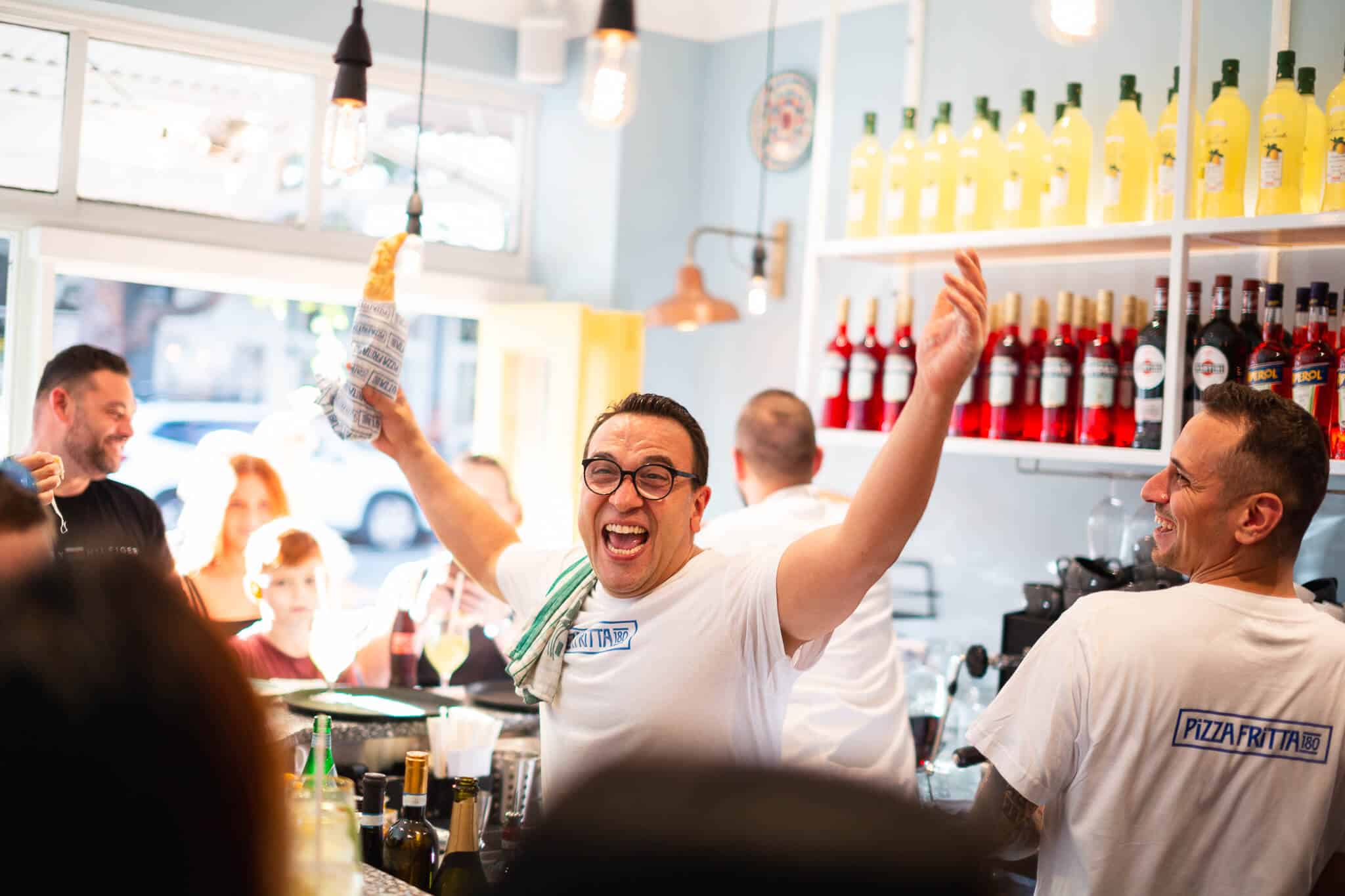
Pizza fritta has been feeding Neapolitans for over a century. Outside Italy, though, most people are only just discovering it — and once they do, they tend to wonder why it took so long.
So what makes it so enduring? Why does Naples guard it so fiercely? And why are Sydney diners, particularly around Surry Hills, suddenly head over heels for a folded, fried pocket of dough?
The answer isn’t simply that it’s fried. Pizza fritta offers something most pizzas don’t — contrast, nostalgia, portability and a little theatre, all in the same bite.
👉 Discover Authentic Neapolitan Pizza Fritta In Sydney
It Was Born From Necessity (And That Still Matters)
Pizza fritta rose to prominence during World War II. Wood for ovens was scarce, and certain toppings had become expensive or impossible to source. Frying dough in oil was faster, cheaper and required almost nothing beyond a pot and heat.
What began as a workaround quietly became a tradition.
The technique — flash-frying at around 180 degrees — sealed the dough almost instantly, locking in steam and keeping the interior soft while the outside turned golden and crisp. The result was something distinct: not a cheaper version of baked pizza, but a different thing entirely. More tactile. More immediate.
Pizza fritta wasn’t born as a substitute. It just never left.
👉 Learn What Pizza Fritta Actually Is
The Texture Is Genuinely Addictive
Ask anyone who’s had pizza fritta what they remember most, and they’ll usually describe the moment they tore it open. The exterior gives — lightly, satisfyingly — and a rush of warm steam escapes from a soft, airy centre. The filling, whether molten fior di latte or ricotta and salami, collapses into the dough.
That contrast is the whole point. Baked pizza offers chew and char. Pizza fritta offers crackle and steam. It’s closer to a perfectly made arancini than anything you’d pull from a wood-fired oven.
Indulgent, yes — but surprisingly not heavy when it’s made properly.
It’s Built For The Street
Pizza fritta was never meant for a plate. It’s wrapped in paper, eaten standing up, held in one hand while the other gestures mid-story. That’s not an accident — it’s the whole design.
In Naples, vendors would fry batches and deliver them through neighbourhoods. Families would call orders down from balconies. Friends would grab one late at night, walking home from work. The food and the city were inseparable.
That street-food DNA hasn’t faded. It’s still there in every paper-wrapped order — casual, but crafted.
It Feels Indulgent Without Tipping Over
“Fried” gives people pause. Fair enough.
But pizza fritta is flash-fried hot and fast. The dough seals in seconds, which means oil stays out rather than soaking in. The interior stays light because steam expands inside the pocket as it cooks. What you get is richness without weight — satisfying in the way that good comfort food is, not in the way that leaves you regretting it.
Most first-timers are genuinely surprised. Especially when it’s shared.
There’s Nothing Else Like It In Sydney
Sydney does excellent wood-fired pizza. Nobody’s arguing otherwise. But pizza fritta sits in a completely different category — sealed and filled rather than open-faced, crisp-shelled rather than chewy-based, eaten with your hands rather than sliced.
The flavours are familiar: tomato, mozzarella, salami, ricotta. What’s unfamiliar is everything else — the format, the texture, the way you eat it. That combination of recognisable and unexpected is genuinely exciting, and it’s not a gimmick. It’s a parallel tradition that never made it here until now.
It Was Made For Sharing
Pizza fritta doesn’t really work as a solitary meal — or rather, it’s better when it isn’t one. Tear it open at the table, pass pieces around, order a few different fillings and work through them together. The meal finds its own rhythm: relaxed, unhurried, a little celebratory.
It turns dinner from a transaction into something worth lingering over.
It Has Cinematic Heritage
Pizza fritta became culturally iconic in part because of Sophia Loren. In The Gold of Naples (1954), her character eats one wrapped in paper on the street — joyful, unapologetic, completely at ease. That image has stuck for seventy years.
It’s not fine dining. It’s real dining. And there’s a reason that distinction still resonates.
It Fits Modern Sydney More Than You’d Expect
Pizza fritta feels old-world. It also fits perfectly into the way people want to eat right now — authentic, social, casually excellent, and different from the usual rotation.
Sydney diners are increasingly drawn to food with genuine history behind it: strong culinary roots, a reason for existing beyond novelty. Pizza fritta has all of that. And in a neighbourhood like Surry Hills — energetic, curious, a little irreverent — it feels less like an import and more like it belongs.
So Why Is Pizza Fritta So Popular?
Because it delivers on several levels at once — heritage, texture, portability, comfort, shareability — without overselling any of them. It’s nostalgic without feeling dated. Indulgent without being excessive. Different without being alienating.
That balance is harder to achieve than it sounds. And once you’ve had it fresh — shell cracking open, steam rising, filling still molten — it’s not hard to understand why Naples never stopped eating it.
👉 Try Pizza Fritta For Yourself
Frequently Asked Questions
Pizza fritta became popular because it was affordable, portable and deeply satisfying during times when oven-baked pizza wasn’t practical. Over generations it grew into a beloved street-food tradition rooted in community, neighbourhood culture and genuine culinary craft.
Not exactly. Pizza fritta is a traditional Neapolitan style where the dough is sealed — usually folded or filled — and flash-fried, creating a crisp golden exterior and a soft, steamy interior. It’s a distinct tradition, not simply a fried version of baked pizza.
When made properly, pizza fritta is surprisingly light inside. High-temperature frying seals the exterior quickly, preventing oil from penetrating the dough. Most first-timers are genuinely surprised by how balanced it feels.
The paper wrapping reflects pizza fritta’s street-food origins. It keeps the heat in, absorbs any surface oil and makes it easy to eat by hand while it’s still hot — exactly as it’s always been eaten in Naples.
It works beautifully shared. Tearing it open at the table, passing pieces around and ordering a mix of fillings is the most enjoyable way to eat it — social, relaxed and a little celebratory.